
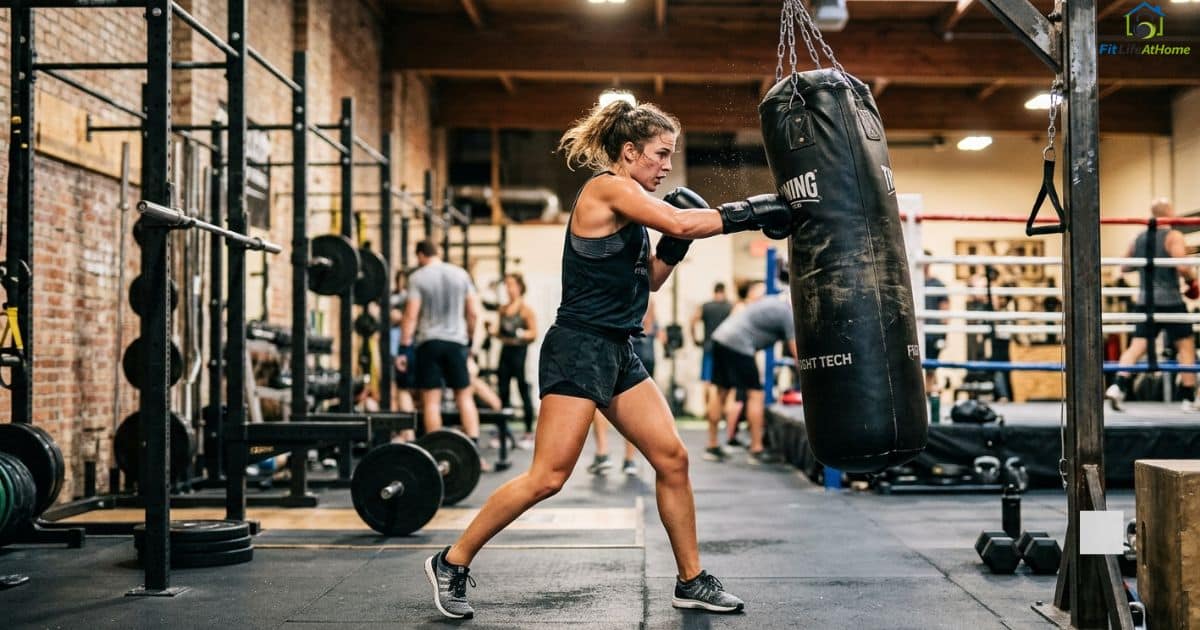
Yes, a punching bag is a good workout. It builds cardiovascular fitness, muscular endurance, coordination, and core control in one session, and it raises your heart rate faster than most people expect. It works best for adults who find treadmills boring, want hard conditioning without long running mileage, or need a physical outlet after a stressful day. The biggest limitation is muscle growth. A bag gives you almost no way to add resistance, so it will not build significant size or maximum strength on its own.
Key Takeaways
- Heavy bag work is high-intensity conditioning, not a strength program.
- Power starts at the floor. Legs and trunk generate most of the force, not the arms.
- A 155 lb adult burns roughly 175 to 415 calories in 30 minutes.
- Beginners tire fast because holding a guard is an isometric hold, and arm work spikes heart rate early.
- Fat loss still requires a calorie deficit. Diet decides the outcome.
- Wraps plus gloves are not optional. Hand and wrist injuries are the most common problem.
- Add two weekly resistance sessions for a complete program.
Is a Punching Bag a Good Workout?
Yes, for conditioning, coordination, and stress management. Hard rounds sit in the vigorous-intensity zone described by the Physical Activity Guidelines for Americans, which recommend 75 to 150 minutes of vigorous activity weekly. Three 25-minute sessions cover that.
Where it falls short is loading. Progressive overload, the gradual increase in resistance that drives strength and size, is hard to apply to a bag. You can punch faster or longer, but you cannot add 10 pounds to a punch.
Practical takeaway: use the bag for cardio and skill, then keep two short strength sessions weekly.
Why Punching Bag Training Is Different From Traditional Cardio
Bag work is interval training by default. A three-minute round with a one-minute rest produces repeated heart rate spikes and recoveries, not the flat output of a treadmill walk.
Explosive output. Each punch is a short, near-maximal effort. Repeated explosive contractions lean on anaerobic energy systems, which fatigue faster than aerobic ones.
Upper-body demand. Arm-dominant exercise raises heart rate and perceived effort more than leg exercise at the same absolute workload. Smaller muscle mass means less efficient oxygen use and a stronger blood pressure response. This explains most of the first-session shock.
Constant coordination. You track a moving target, adjust distance, and hold balance. That mental load adds to the exhaustion.
Most beginners stop in round two because their shoulders give out, not their heart.
What Muscles Does a Punching Bag Workout?
Punching is a full-body chain. Force starts with the legs pushing into the floor, transfers through the hips and trunk by rotation, and finishes at the arm. The arm is the last link, not the engine. Biomechanical analyses of skilled boxers consistently show that leg drive and trunk rotation contribute more to punch force than arm extension. That is why untrained heavier people often punch softer than smaller trained athletes.
Movement | Primary muscles | Main purpose |
Jab | Front deltoid, triceps, obliques, lead-leg quad | Range finding, tempo, high-volume endurance |
Cross | Rear glute and quad, obliques, chest, triceps | Main power punch via hip rotation |
Hook | Glutes, obliques, lats, chest, rear deltoid | Short-range rotational force |
Uppercut | Quads, glutes, spinal erectors, biceps, front deltoid | Vertical drive from bent knees |
Holding guard | Front and mid deltoids, upper traps, forearms | Isometric endurance, main source of arm fatigue |
Footwork and pivots | Calves, quads, glutes, hip abductors | Balance, positioning, steady background effort |
Practical takeaway: if your shoulders burn but your legs feel fresh, you are punching with your arms.
How Many Calories Does a Punching Bag Burn?
A 30-minute session burns roughly 145 to 575 calories depending on body weight and intensity. The range is wide for a reason.
Calculators disagree because they use different MET values. The Compendium of Physical Activities lists punching bag work near 5.5 METs, while boxing in a ring is listed above 12 METs. Many calculators quietly use the in-ring figure and label it “boxing.” That substitution can more than double the estimate. Rest periods and technique efficiency shift the real number further.
Estimated calories per 30 minutes:
Body weight | Moderate rounds | Intense continuous work | HIIT-style rounds |
130 lb | 145-195 | 210-275 | 270-350 |
155 lb | 175-230 | 250-325 | 320-415 |
185 lb | 210-275 | 300-390 | 385-495 |
215 lb | 240-320 | 350-450 | 445-575 |
Treat these as estimates, not measurements. Individual burn varies with fitness level and body composition.
Does Punching a Bag Build Muscle?
Partly, but not the way most people hope. Bag work builds muscular endurance and rate of force development, meaning how quickly you produce force. Beginners often notice firmer shoulders, forearms, and midsection in the first months.
Hypertrophy is different. Muscle growth needs mechanical tension plus progressive overload. A punch is fast and low-resistance, and the only variables you can raise are speed and volume. Both plateau quickly.
Practical takeaway: expect conditioning, sharper power, and grip strength. Expect visible size only if you lift two to three days per week.
Can a Punching Bag Help With Weight Loss?
Yes, as one input into a calorie deficit. Fat loss happens when energy intake stays below expenditure across weeks and months. Bag training raises expenditure efficiently.
Three points matter more than the workout itself.
Diet decides the margin. A hard 30-minute session offsets roughly one large coffee drink and a pastry.
Consistency beats intensity. Four sustainable 25-minute sessions per week outperform two brutal ones and a week of soreness.
Recovery protects the plan. Injury is the most common reason people quit, and quitting is what stalls fat loss.
Is a Punching Bag Better Than Running?
Neither is better overall. Running burns more calories per minute for most people. Bag work trains more of the body and holds attention better.
Factor | Punching bag | Running |
Calories per 30 min (155 lb) | 175-415 | 300-400 |
Upper body involvement | High | Low |
Skill required | Moderate to high | Low |
Repetitive leg impact | Low to moderate | Higher |
Progress tracking | Harder to quantify | Easy (pace, distance) |
Best for | Conditioning, coordination, stress relief | Aerobic base, endurance events |
Punching Bag vs Jump Rope
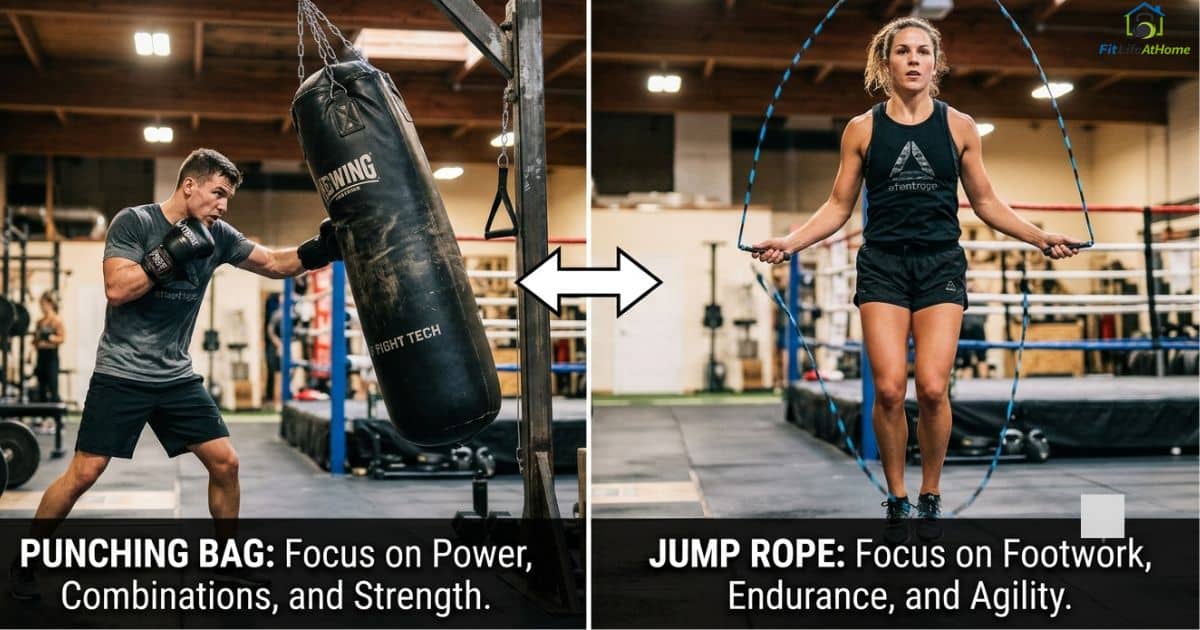
Jump rope is cheaper, more portable, and burns more calories per minute. The bag trains upper-body and rotational work a rope cannot.
Factor | Punching bag | Jump rope |
Calories per 30 min (155 lb) | 175-415 | 325-450 |
Cost and space | Higher (bag, mount, gloves) | Very low |
Calf and Achilles load | Low | High |
Upper body demand | Moderate to high | Low |
Skill trained | Timing, distance, rotation | Rhythm, foot speed |
Apartment suitability | Often poor (vibration) | Poor on upper floors |
Punching Bag vs Weight Training
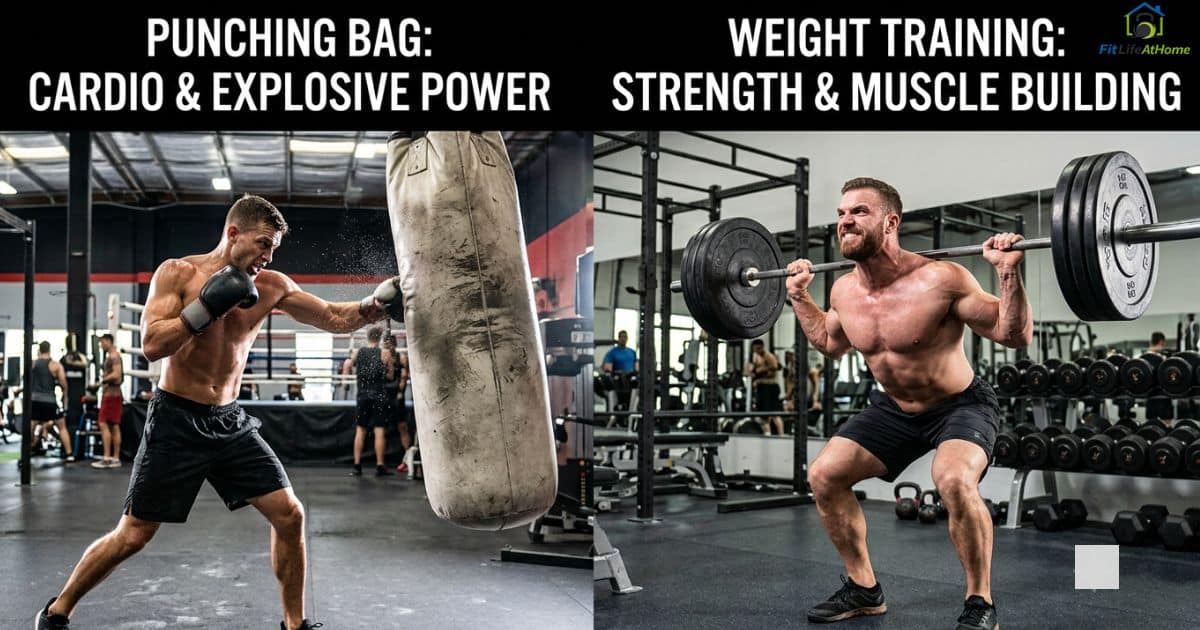
They solve different problems. Weights build muscle and strength. A bag builds conditioning and skill. Most people benefit from both.
Factor | Punching bag | Weight training |
Muscle size | Minimal change | Primary tool |
Maximum strength | Little change | Large gains |
Cardiovascular fitness | High | Low to moderate |
Progressive overload | Difficult to apply | Simple and measurable |
Bone and connective tissue support | Limited evidence | Well supported |
Equipment cost | Moderate | Moderate to high |
Mental Benefits of Punching Bag Workouts
The benefits are real, but the popular explanation is wrong. Regular vigorous exercise reduces symptoms of anxiety and depression across a large body of research, and single sessions often lift mood for hours. Bag work delivers those effects like any other hard training.
Skill learning adds more. Visible technical improvement builds self-efficacy, the belief that you can handle a challenge.
One myth deserves correction. The idea that hitting a bag “releases” anger is not supported. Research on venting has found that striking something while dwelling on what angered you can increase later aggression rather than reduce it. The benefit comes from the exercise, not the venting.
Common Beginner Mistakes
Punching with the arms only. The arm is what you can see moving. Fix it by pivoting the rear foot so the hip rotates first.
Hitting too hard, too early. A heavy bag does not give. Start near 60 percent power for the first month while tissue adapts.
Dropping the hands. Fatigue causes it. Shorten rounds instead of letting form degrade.
Holding the breath. Exhale sharply on each punch. It braces the trunk and lowers perceived effort.
Chasing the swinging bag. Let it settle first. Striking a bag moving toward you increases wrist strain.
No structure. Random flailing burns out fast. Use timed rounds from day one.
Safety Tips for Punching Bag Training
Wrap, then glove. Wraps stabilize the wrist and the small bones of the hand. Gloves add padding. Neither replaces the other. Fractures of the small-finger metacarpal are a known injury from poor alignment.
Keep the wrist neutral. Forearm, wrist, and first two knuckles form a straight line at impact. A bent wrist is the most common cause of injury.
Never punch a heavy bag bare-knuckled.
Progress slowly. Add one round per week rather than doubling session length.
Watch for overuse. Lasting shoulder, elbow, or wrist pain means tendons are not keeping up. Rest a few days, then return at lower volume.
Warm up. Five minutes of shoulder circles, footwork, and slow shadowboxing.
Who Should Buy a Punching Bag?
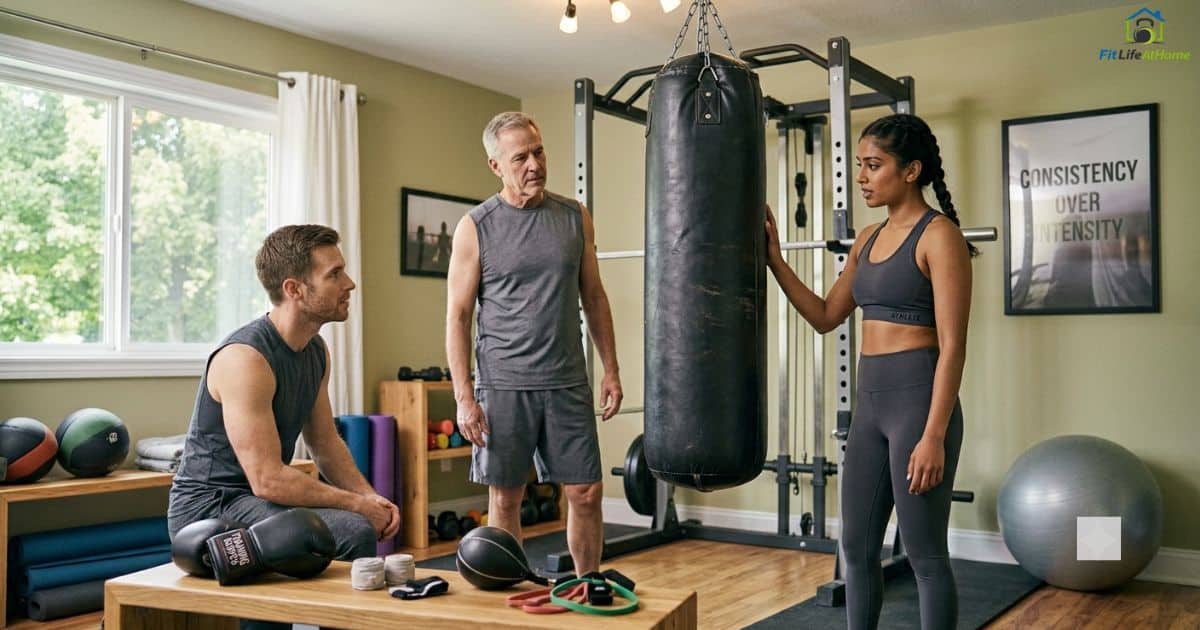
A bag suits you if cardio machines bore you, you want vigorous exercise with less repetitive leg impact than running, you have space and a solid mounting point, and you value stress relief as much as calorie burn.
Something else may serve you better if your goal is muscle size, you have current wrist, hand, or shoulder problems, you live above neighbors, or you want low-skill exercise you can start today.
When Is a Punching Bag NOT the Best Workout?
When strength is the priority. Barbells and dumbbells do this far better.
When training for an endurance event. Specificity matters. Runners need to run.
When hands or shoulders are already injured. Impact loading on irritated tendons delays healing.
When you will not learn basic technique. Poor mechanics cut results and raise injury risk.
When mounting is unsafe. A heavy bag torn from a ceiling is a serious hazard. Free-standing bags are the safer compromise.
Pros and Cons of Punching Bag Workouts
Pros | Cons |
Vigorous full-body conditioning | Minimal muscle and strength gains |
Time-efficient interval structure | Hand and wrist injury risk |
Trains coordination and balance | Requires technique to be effective |
Strong stress-relief and mood benefits | Progress is hard to measure |
Less repetitive leg impact than running | Noise, vibration, and mounting problems |
Rarely boring | Upfront cost for bag and gear |
Bottom Line
A punching bag is a good workout if your goals are conditioning, coordination, stress relief, and staying consistent with training you enjoy. It is a poor primary choice for muscle size, maximum strength, or race performance.
The strongest version is not bag-only. Three bag sessions plus two resistance sessions weekly covers cardiovascular fitness, endurance, strength, and mental health. If you are unsure, start with a free-standing bag, wraps, and gloves, and give it eight focused weeks.
Frequently Asked Questions
Start with 10 to 15 minutes of actual work: three or four rounds of two minutes, with one minute of rest. Most beginners overestimate their capacity and finish sore in the hands and shoulders. Build toward 20 to 30 minutes across six to eight weeks.
Daily heavy bag work is not recommended for beginners. Hands, wrists, and shoulder tendons adapt more slowly than muscles and the cardiovascular system. Three to four sessions per week allows recovery. For daily activity, alternate bag days with walking, mobility work, or light resistance training.
Yes. Gloves absorb impact, but wraps support the wrist and hold the small bones of the hand in alignment. They do different jobs. Skipping wraps is a leading reason new users develop wrist pain or bruised knuckles within the first few weeks.
No exercise removes fat from one specific area. Spot reduction is not supported by evidence. Bag work contributes to overall fat loss by raising energy expenditure, and abdominal fat tends to respond as total body fat drops. Diet remains the deciding factor for most people.
A common guideline is roughly half your body weight, so a 160 lb adult would use a 70 to 80 lb bag. Lighter bags swing excessively and can strain the wrist. Heavier bags feel more solid but are harder on the hands early on.
Often yes, partly because it places less repetitive impact on knees and hips than running. Start with lighter contact, shorter rounds, and close attention to shoulder tolerance. Anyone with a cardiovascular condition or joint problems should speak with a physician before starting vigorous training.
It builds shoulder endurance more than strength. Holding a guard is an isometric hold that fatigues the deltoids quickly, and repeated punching trains resistance to that fatigue. For real strength and size in the shoulders, add pressing and raising movements with weights.
Sometimes, using a free-standing bag on a shock-absorbing mat. Hanging bags send vibration through ceiling joists and usually create problems for neighbors below. Check your lease first. Impact noise complaints are common, and mounting hardware into shared structures may breach rental terms.
Shadowboxing is excellent for technique and warm-ups, but it burns fewer calories, since there is no impact resistance and effort quietly drops. Use shadowboxing to learn mechanics and the bag to develop conditioning and power. Most good sessions include both.
Conditioning usually improves within two to three weeks: less breathlessness, better round endurance. Technique improves noticeably by week four. Visible body composition change depends mainly on diet and typically takes eight to twelve weeks of consistent training plus a modest calorie deficit.