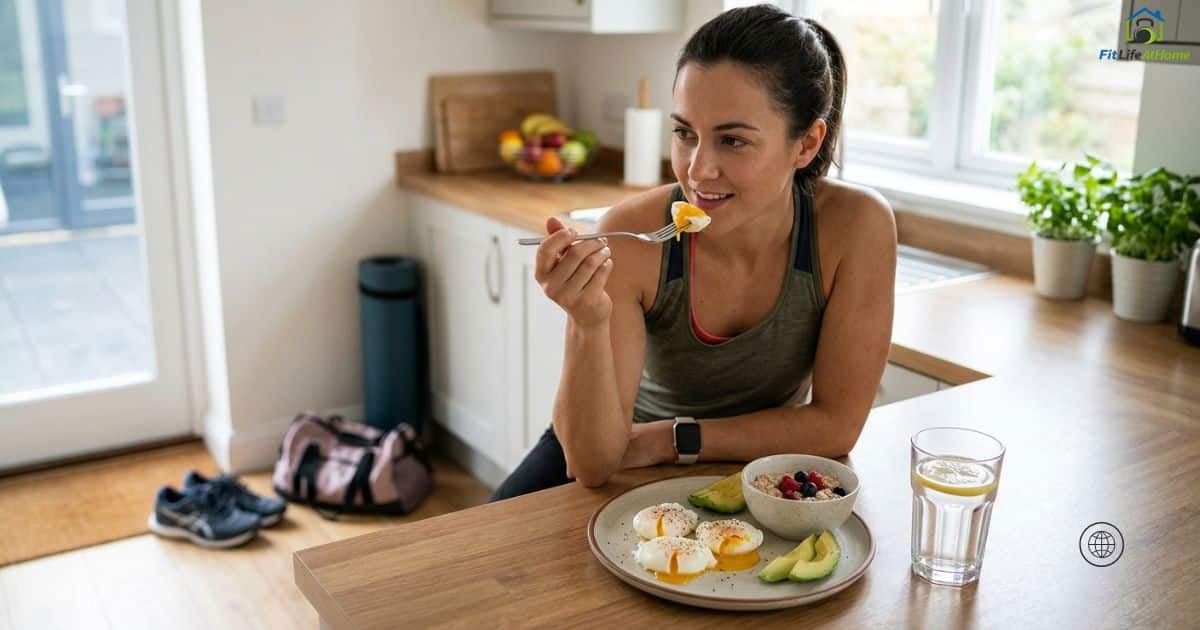
Yes, eggs can be a smart pre-workout food for most people. They give you high-quality complete protein and useful nutrients, and they settle well when you eat them with enough lead time. But eggs are low in carbs and digest slowly because of their fat, so they work best eaten about 1.5 to 3 hours before you train, ideally with a carb source for energy. For a quick, last-minute session, a lighter snack often feels better.
At-a-Glance Decision Box
Best timing: About 1.5 to 3 hours before training. Larger meals need more time; egg whites and small portions need less.
Best serving size: 2 to 3 whole eggs for most people. Add a fourth for a bigger meal or higher protein needs.
Best carb pairings: Oatmeal, whole-grain toast, a banana, berries, or a small serving of rice or sweet potato.
Who should avoid eggs before workouts: An egg allergy, a stomach that feels heavy after eggs, or advice from a doctor or dietitian to limit them.
Key Takeaways
- Eggs are a complete protein, with all nine essential amino acids your body cannot make on its own.
- One large egg has about 6 grams of protein and roughly 70 calories.
- Eggs are very low in carbs, so pair them with a carb food for energy.
- Whole eggs are a modest leucine source. It takes about 3 to 5 to reach the amount that fully triggers muscle building on its own.
- Eggs suit strength training well. For fast cardio, quicker carbs may serve you better.
Nutritional Benefits of Eggs Before a Workout
The protein is the main draw. Egg protein is complete and ranks at the top for protein quality, so your body absorbs and uses it efficiently. This supports muscle repair and helps limit muscle breakdown during and after exercise.
Eggs also carry leucine, the amino acid that switches on muscle building. One large egg has about 0.6 grams of it, so eggs work best as part of a full meal rather than a tiny snack.
Beyond protein, egg yolks hold choline, vitamin D, vitamin B12, and selenium. Choline supports muscle and brain function, and B vitamins help your body turn food into energy. Most of these sit in the yolk, so skipping it loses much of the value.
Pros and Cons
Pros:
- High-quality complete protein for muscle support
- Rich in vitamins and minerals for the calories
- Filling, so you are less likely to feel hungry mid-workout
- Affordable, easy to find, and simple to cook
Cons:
- Very low in carbs, so they do not give quick energy on their own
- Slow to digest because of the fat, so they need lead time
- A heavy egg meal too close to training can feel uncomfortable
- Not an option for people with an egg allergy
How Long Before a Workout Should You Eat Eggs?
Give eggs about 1.5 to 3 hours to digest. The reason is fat: it slows how fast your stomach empties, and egg yolks hold most of it. A two-egg breakfast may feel fine after 90 minutes, while a larger plate with three or four eggs, cheese, and oil may need closer to three hours. Short on time? Egg whites digest faster because they hold almost no fat, and a small portion clears the stomach sooner than a big meal.
Eggs Before Cardio vs Strength Training
For strength training, protein around your workout helps muscle repair and growth, so a meal with eggs a couple of hours before lifting is a solid choice. Add carbs to fuel the sets. For cardio, it depends on intensity. Hard, fast cardio runs mostly on carbs, which eggs cannot supply, and they can sit heavy right before a run. For easy cardio like a walk, eggs with lead time are fine.
Different Workout Scenarios
The right call depends on how long and how hard you train, and how much time you have first.
30-minute workout: A short session does not need a big meal. If you ate in the last few hours, you may not need anything. If you want fuel, a banana beats eggs, which will not digest in time.
60-minute gym session: This is where eggs shine. Eat 2 to 3 eggs with a carb like toast or oatmeal about 1.5 to 2 hours before. You get protein for your muscles and carbs to power the work.
Long endurance workout: For a long run or ride, carbs matter most. Eggs can be part of a meal 2 to 3 hours out, but keep the portion moderate and lean on carbs. Too much fat close to a long effort can cause stomach trouble.
Fasted morning workout: If you train right after waking and prefer an empty stomach, skip eggs and eat them after instead. If you want something first, egg whites or a small portion with fruit digest faster than a full egg breakfast.
Best Ways to Eat Eggs Before a Workout
The best preparation is light on added fat and easy on your stomach.
- Hard-boiled eggs. Portable and no added oil.
- Scrambled with little or no oil or butter.
- Egg whites, or a mix of whole eggs and whites, for a lighter, faster option.
- A veggie omelet made with minimal oil.
- Eggs on whole-grain toast, which adds the carbs eggs lack.
Skip heavy fried eggs cooked in lots of butter or oil right before training. The extra fat slows digestion further.
Foods to Pair with Eggs
Pair eggs with a carb source, since carbs are the fuel your muscles reach for first. Good partners include oatmeal, whole-grain toast, fruit, or rice. A simple plate is two eggs, a slice of toast, and a banana. If you train soon after eating, favor the fruit or toast and keep the portion smaller.
Pre-Workout Food Comparison
Food | Main nutrient | Carbs for energy | Digests | Best eaten before | Best for |
Eggs | Protein and fat | Low | Slower | 1.5 to 3 hours | Muscle support |
Oatmeal | Complex carbs | High | Moderate | 1.5 to 2 hours | Lasting energy |
Banana | Simple carbs | High | Fast | 30 to 60 minutes | Quick fuel |
Protein shake | Protein | Low to moderate | Fast | 30 to 60 minutes | Fast protein |
Best Egg Meals by Fitness Goal
Match your meal to what you are training for.
Goal | Suggested egg meal | Why it works |
Muscle gain | 3 eggs, oatmeal, banana | High protein plus carbs for lifting |
Fat loss | 2 eggs or 3 whites with berries | Filling protein, fewer calories |
Endurance | 2 eggs with a bigger bowl of oatmeal or rice | Carb-focused with some protein |
Morning workouts | 2 egg whites with fruit, or eggs after | Light and quick to digest early |
Myth vs Fact
Myth: You must eat protein right after your workout or it is wasted. Fact: The “anabolic window” is wider than once thought. Total daily protein matters more than perfect timing for most people.
Myth: Egg yolks are bad, so eat only the whites. Fact: The yolk holds most of the vitamins, minerals, and choline. For healthy adults, current U.S. guidance no longer sets a strict cholesterol limit.
Myth: Eggs give you fast energy before a workout. Fact: Eggs are protein and fat, not carbs. They support muscle but do not provide quick fuel, so pair them with a carb.
Myth: More eggs always mean more muscle. Fact: Muscle building plateaus once a meal has enough protein and leucine. Extra eggs add calories, not more growth.
Myth: You cannot work out after eating eggs. Fact: You can, with time to digest. Give a full egg meal 1.5 to 3 hours, or choose egg whites for a faster option.
Common Mistakes
- Eating a big egg meal too close to training. The most common issue, and it often causes a heavy, sluggish feeling.
- Skipping carbs. Eggs alone may leave your energy flat during a hard session.
- Frying in lots of oil or butter. The added fat slows digestion.
- Eating too many eggs at once. A large amount of fat can upset your stomach.
- Testing eggs on race day. Try new foods on easy training days first.
Who Should Avoid Eggs Before Exercise?
- Anyone with an egg allergy should avoid them completely.
- People whose stomachs feel heavy or upset after eggs may do better with a lighter option.
- Those doing very short or fasted workouts who prefer to train on an empty stomach.
- Anyone advised by a doctor or dietitian to limit certain foods.
Eggs contain dietary cholesterol, all of it in the yolk. Current U.S. dietary guidance no longer sets a strict daily cholesterol limit for healthy adults, but people with certain health conditions may still get personal advice. If that is you, follow your own healthcare provider.
Should You Eat Eggs Before Your Workout? A Quick Decision Guide
Run through three quick questions.
- How soon are you training? Less than an hour out, skip a full egg meal and reach for a quick carb, or use egg whites. Ninety minutes or more, eggs work well.
- What kind of workout? Lifting or moderate training, eggs plus a carb are a strong pick. Long or intense cardio, lead with carbs and keep eggs light and early.
- What is your goal? Muscle gain, add more protein and carbs. Fat loss, keep it to 2 eggs or whites with fruit. Endurance, prioritize carbs with a little protein.
With the time, a protein-friendly workout, and no reason to avoid eggs, they are a great choice. Otherwise, a carb snack may serve you better.
Practical Recommendations
For beginners: Keep it simple. Two hard-boiled eggs with a banana about two hours before you train, then adjust to how you feel.
For experienced lifters: Treat eggs as one part of your protein plan. Since it takes about 3 to 5 eggs to fully trigger muscle building alone, pair them with another protein like Greek yogurt, or save the bigger serving for after training.
Bottom Line
Eggs are a strong pre-workout protein source when you use them well. Eat them about 1.5 to 3 hours before training, pair them with a carb, and keep the added fat low. They fit strength training and moderate sessions especially well. For fast, last-minute workouts or long endurance efforts, lean more on carbs. Test what sits well for your body and stick with it.
Yes. Eat them about 1.5 to 3 hours before training with a carb source for energy.
Should you eat eggs before or after a workout?
Both work. Before, they support your session; after, they help recovery.
It is not ideal, since whole eggs digest slowly. If time is short, choose egg whites or a small portion.
Yes. They are portable, easy to eat, and cooked without added oil.
For protein, yes. For energy, no. Pair them with toast, oatmeal, or fruit.
Yes, with time to digest. If you train soon after waking, a banana or egg whites may feel better.
Whole eggs give more nutrients but digest slower. Egg whites are lighter and faster when time is short.
Lorem ipsum dolor sit amet, consectetur adipisicing elit. Optio, neque qui velit. Magni dolorum quidem ipsam eligendi, totam, facilis laudantium cum accusamus ullam voluptatibus commodi numquam, error, est. Ea, consequatur.
They can help, since protein keeps you full. Watch your total calories and how you cook them.