Yes, but not right away. Most healthy adults can walk gently within a day or two, train lightly around day 3 to 5, and return to full workouts between day 7 and day 14. The main risk is dislodging the blood clot in the socket, which can cause a painful complication called dry socket. The safest approach is complete rest for 48 hours, then rebuilding intensity in steps. This guide is for healthy, regularly active adults after a routine extraction. Your oral surgeon’s instructions always come first.
Key Takeaways
- Rest completely for the first 24 to 48 hours. No exercise, no bending, no lifting.
- Short easy walks are usually the first safe activity, around day 2 or 3.
- Light training resumes around day 3 to 5, full training around day 7 to 14.
- Weights wait longer than cardio because breath holding spikes pressure at the site.
- Dry socket risk peaks days 2 to 5, exactly when you start feeling better.
- Lower wisdom teeth and surgical extractions both need more time than simple upper ones.
- A week or two off costs you very little strength, and any endurance dip returns fast.
Can You Workout After Wisdom Teeth Removal?
You can, once the socket has stabilized. Not the same day, and for most people not the next day either.
The first 48 hours protect a fresh clot that has no new tissue supporting it yet. Anything that raises your heart rate, raises your blood pressure, or puts your head below your heart works against that.
Recommendation: rest fully for two days, then use a 20 minute walk as your test session. No throbbing, no bleeding, and no pressure at the site means you can progress.
Why Exercise Can Delay Healing
An extraction site is an open wound. A clot forms within hours and acts as a biological bandage over exposed bone and nerve while new tissue grows underneath.
Exercise threatens it three ways.
Heart rate and blood pressure. Harder training pushes more blood through the area and can restart bleeding.
Pressure. Bending, lifting, and straining raise pressure in your head and chest. A healing socket is the weakest point in that system.
Clot loss. If the clot breaks down, bone and nerve are left exposed. That is dry socket. Research shows it typically appears two to four days after surgery, and it is far more common after lower wisdom teeth than upper ones.
Here is what most articles miss. Dry socket peaks in the exact window when surgical pain fades and you feel ready to train. Feeling good on day three means inflammation is settling, not that healing is finished.
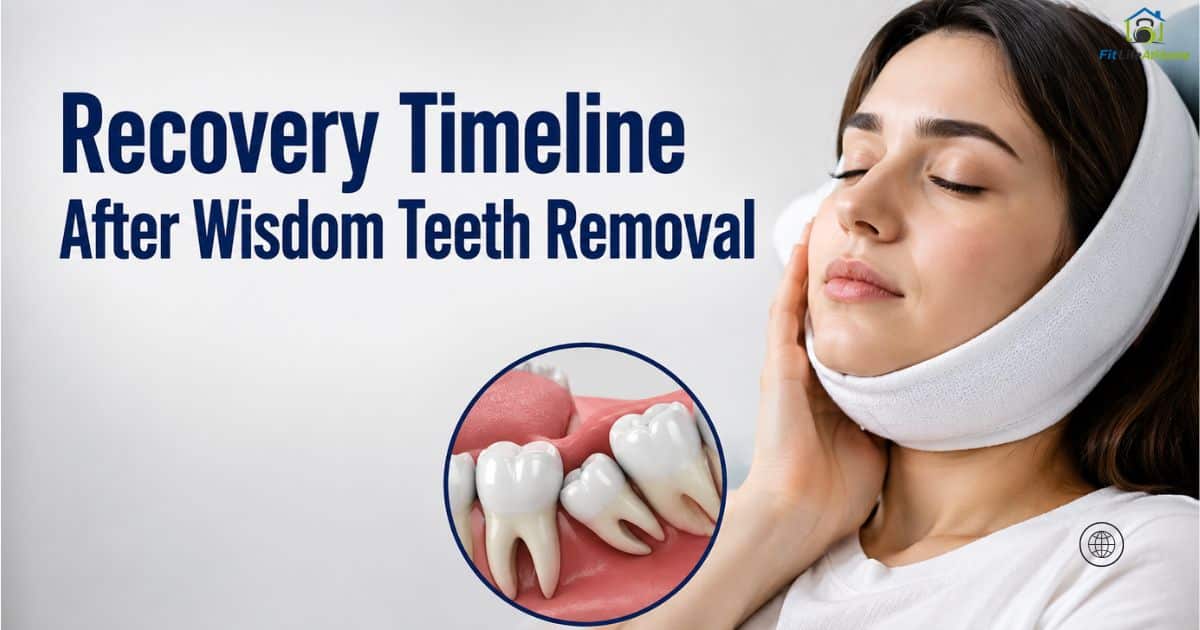
Recovery Timeline After Wisdom Teeth Removal
General guide for a routine extraction. Surgical removals and impacted lower teeth push everything later.
Time After Surgery | Safe Activities | Activities to Avoid |
Day 0 (first 24 hours) | Rest, sitting upright, moving around the house | All exercise, bending, lifting, driving if sedated |
Day 1 to 2 | Short slow walks on flat ground once bleeding stops | Cardio, weights, sports, yoga, swimming, bending |
Day 3 to 5 | Longer easy walks, light stretching, easy stationary bike | Heavy lifting, running, HIIT, contact sport, inversions |
Day 6 to 9 | Moderate cardio, bodyweight work, light weights | Maximal lifts, sprinting, breath holding, competition |
Day 10 to 14 | Gradual return to normal programming | Anything causing pain, throbbing, or bleeding |
Day 14 onward | Full training, including heavy lifting and contact sport | Nothing, if healing has been uneventful |
When Can You Return to Different Types of Exercise?
Exercise | Typical Green Light | What to Watch |
Walking | Day 1 to 2 | Flat, easy, nasal breathing |
Cycling (easy, stationary) | Day 4 to 6 | Stay upright, no aggressive forward lean |
Day 5 to 7 | No inversions or head below heart | |
Pilates | Day 5 to 7 | Avoid breath holding and hard bracing |
Running | Day 7 to 10 | Impact plus heavy mouth breathing |
Weightlifting | Day 7 to 14 | Start light, no maximal effort |
HIIT | Day 10 to 14 | Sustained high heart rate is the issue |
Swimming | Day 10 to 14 | Water bacteria entering an open socket |
CrossFit | Day 14 onward | Load, pressure, and intensity combined |
Team and contact sports | Day 14 onward | Jaw trauma, and mouthguards may not fit |
Note that swimming is restricted for a different reason than lifting. It is the water, not the effort. Understanding why each restriction exists helps you make better calls than following dates alone.
Why Weightlifting Usually Requires More Recovery
Walking and lifting stress your body differently, and only one of them threatens a socket.
When you lift heavy, you brace and hold your breath. That brace, called the Valsalva maneuver, is what lets you move real load. It also sharply raises pressure in your chest and head for a few seconds, far beyond anything walking produces.
That spike is the problem: brief, repeated, and aimed straight at healing tissue. Heavy lifting also involves clenching, which adds mechanical stress, especially after a lower extraction.
Practical version: return to the gym before you return to heavy loads. Two or three technique sessions at half your usual weight beat waiting an extra week and then testing a max.
Signs You’re Ready to Exercise Again
- Bleeding has fully stopped, including no pink when you rinse
- You are off prescription pain medication completely
- Swelling has clearly reduced since day two or three
- You can open your mouth close to normally without sharp pain
- You have eaten semi solid food without discomfort at the site
- A 20 minute brisk walk caused no throbbing at the site
- Your surgeon has cleared you, especially after a surgical extraction
If you cannot tick the painkiller box, wait. Painkillers hide the exact signal you need to make this call.
What Happens If You Return Too Soon?
Most people who train early get away with it. That is worth saying, because exaggerated warnings get ignored.
Realistic outcomes, most to least likely:
Restarted bleeding. Usually manageable with gauze and rest, and a clear sign to stop.
More swelling and pain. Undoes a day or two of progress.
Dry socket. Less common than the internet suggests, but genuinely painful and needs treatment.
Slower healing overall. The most likely outcome. You lose a week of training to save two days.
Recovery Tips for Active People
Hydrate steadily. Sip through the day. No straws for at least a week, since suction can pull the clot loose.
Protect your protein. This is where active people quietly lose ground. A soft food diet drops protein right when your body needs it to rebuild tissue. Greek yogurt, cottage cheese, eggs, blended soups, and shakes from a cup all work.
Do not undereat. Days of soup and smoothies can leave you hundreds of calories short, and healing costs energy.
Sleep. Most tissue repair happens there, and an extra pillow reduces overnight swelling.
Progress in steps. Use the 50 percent rule for your first session: half your usual weight, volume, or distance. Add 20 to 25 percent each session after. Most people are fully back within four.
Stop worrying about lost fitness. Research on short training breaks generally finds strength and muscle size are largely preserved across breaks under two weeks. Endurance markers can dip slightly in well trained athletes, but they rebound within a few sessions.
Common Mistakes
Training on day three because the pain stopped. The pain curve and the healing curve are not the same curve. Use the checklist, not your mood.
Treating all extractions the same. One clean upper extraction is not two impacted lower teeth removed surgically. Surgical removals involve incisions and sometimes bone work, and need noticeably longer. Ask which you had.
Returning at your old intensity. That is the number you remember. Start at half.
Bending over repeatedly. People remember not to lift, then garden for an hour. Head below heart raises pressure just like a heavy set does.
Heavy mouth breathing on early cardio. It dries the socket area. Keeping sessions easy enough for nasal breathing is a useful filter.
Training on prescription painkillers. You cannot assess pain you cannot feel.
When You Should Contact Your Dentist
- Bleeding that will not stop after 20 to 30 minutes of firm gauze pressure
- Severe pain starting or worsening two or more days after surgery, especially pain spreading to your ear
- A bad taste or smell that will not clear, or a socket that looks empty
- Fever, spreading swelling, or trouble swallowing
- Swelling worsening after day three instead of improving

Bottom Line
You can work out after wisdom teeth removal, and most active people are back to normal training within two weeks.
Rest fully for 48 hours. Use a walk as your first test around day two or three. Add light training at day 3 to 5. Bring back running, weights, and intensity between day 7 and day 14, starting at half your usual load.
Worth repeating: feeling fine on day three is not the same as being healed, and that is exactly when the clot is most vulnerable. A few extra days cost you very little. A complication costs a week or more.
If your extraction was surgical, involved lower teeth, or has not healed smoothly, ask your surgeon before you train.
Frequently Asked Questions
Light activity is usually fine by day three if bleeding has stopped and swelling is improving. Walking, gentle stretching, and easy stationary cycling work well. Save running, weights, and high intensity for later in the week. Day three also sits inside the peak dry socket window.
Most people lift light weights around day 7 and return to normal loads between day 10 and day 14. Heavy lifting involves breath holding and straining, which spike pressure at the extraction site. Start at half your usual weight and rebuild over three or four sessions.
Easy running is usually reasonable around day 7 to 10 after a routine extraction. Two things make it riskier than walking: impact travels through your jaw, and heavy mouth breathing dries the healing area. Start short and easy, and stop if you feel throbbing.
Almost certainly not. Research on breaks under two weeks generally shows strength and muscle size are largely maintained. Trained endurance athletes may see a small dip in aerobic markers, which comes back quickly. You may feel flat in session one. That passes.
Gentle yoga is usually fine around day 5 to 7, with one exception. Skip inversions and any pose that puts your head below your heart, including downward dog and deep forward folds. That position raises pressure at the site. Start with standing and seated poses.
Walking is the safest early activity, often possible by day one or two. Keep it flat, easy, and short at first. It supports circulation and mood without spiking blood pressure. Avoid inclines, brisk paces, and anything that leaves you breathing hard through your mouth.
Wait roughly 10 to 14 days. The concern is the water, not the effort. Pools, lakes, and hot tubs can introduce bacteria into an open socket, and swimming adds breath holding on top. This restriction usually lasts longer than the one on land based cardio.
The likeliest result is restarted bleeding, more swelling, and a day or two of lost progress. Less commonly the clot dislodges and causes dry socket, which is painful and needs treatment. Most people who train early are fine, but the downside outweighs the delay.
The clearest sign is severe pain that starts or worsens two to four days after surgery instead of steadily improving, often radiating toward your ear. You may also notice a bad taste, a lingering odor, or a socket that looks empty. Contact your dentist.
Yes, and it is a good idea. A soft food diet often cuts protein exactly when your body needs it for tissue repair. Drink from a cup, never a straw, for at least the first week. Straw suction can pull the clot loose.