
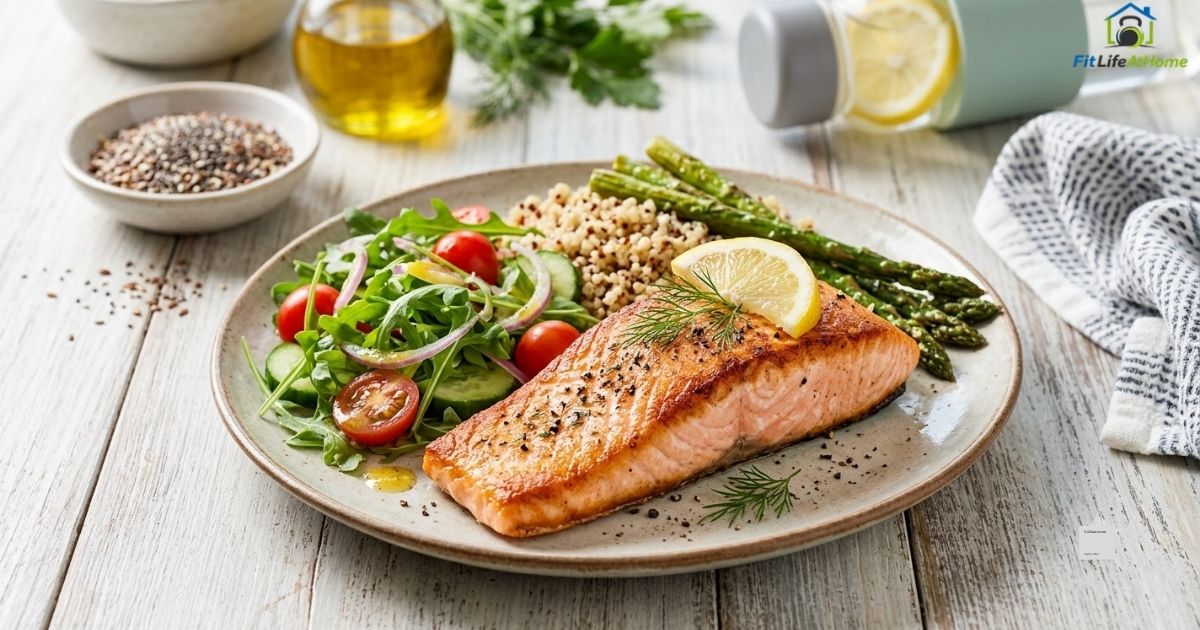
Yes, salmon is one of the best proteins you can put on your plate when you’re trying to lose weight. A 3 to 4 ounce serving delivers around 17 to 22 grams of protein for roughly 130 to 200 calories depending on the type, and its mix of protein and healthy fats keeps you fuller than leaner proteins do. But salmon doesn’t “burn fat.” It works because it makes eating in a calorie deficit easier to stick with. Here’s exactly how to use it.
Is salmon good for weight loss? The short answer
Yes. Salmon supports weight loss because it’s rich in high-quality protein and heart-healthy omega-3 fats that promote fullness and help protect your muscle while you lose fat, all at a reasonable calorie cost.
It helps to be honest about how this works. No single food melts away pounds. You lose weight when you take in fewer calories than you burn, a calorie deficit. Salmon makes that deficit far easier to sustain, because protein is the most filling macronutrient. When a food keeps you satisfied for hours, you’re less likely to snack or overeat later.
So treat salmon as one of the most useful high-protein foods in your rotation: a tool, not a magic bullet.
Salmon nutrition facts (calories, protein, fat, and omega-3)

A 3-ounce (85g) cooked serving of salmon has about 175 to 200 calories, 17 to 22 grams of protein, 5 to 11 grams of mostly heart-healthy fat, and zero carbohydrates, based on USDA nutrient data. It also delivers a generous dose of omega-3s and is one of the few natural food sources of vitamin D.
Serving (cooked) | Calories | Protein | Fat | Omega-3 (EPA + DHA) |
3 oz (85g) | ~175 | ~22g | ~10g | ~1,500 mg |
4 oz (113g) | ~230 | ~29g | ~13g | ~2,000 mg |
6 oz (170g) | ~350 | ~44g | ~20g | ~3,000 mg |
Values are approximate and based on farmed Atlantic salmon, the most common type in U.S. supermarkets. Leaner wild species run lower in calories and fat.
How many calories are in salmon?
A standard 3-ounce cooked serving has roughly 175 to 200 calories, more than chicken breast, but the extra comes mostly from beneficial fats that make salmon more satisfying.
How much protein is in salmon?
You’ll get about 17 grams in a raw 3-ounce portion, rising to around 22 grams once cooked. Salmon is a complete protein, supplying all nine essential amino acids your body needs to maintain muscle.
Omega-3s (EPA and DHA) in salmon
Salmon is rich in two omega-3 fats found almost exclusively in seafood: EPA and DHA. These are more potent than the plant-based omega-3 (ALA) in foods like flaxseed, and a single serving can meet or exceed the ~250 mg per day many experts suggest for general health.
How does salmon help with weight loss?
Salmon supports fat loss in four main ways: it keeps you full, it costs energy to digest, its omega-3s may support metabolic health, and it’s packed with nutrients your metabolism relies on.
- High-quality protein and satiety. Protein is the most filling macronutrient and helps regulate appetite hormones, so a salmon-based meal keeps hunger away longer than a lower-protein one, making it easier to eat less without feeling deprived.
- The thermic effect of protein. Your body burns energy digesting food, and protein has the highest “thermic effect” of all, roughly 20 to 30% of its calories are used just breaking it down. That’s a modest but real edge over fats and carbs.
- Omega-3s and fat metabolism. Current evidence suggests the omega-3s in salmon may help reduce inflammation linked to obesity and support healthy metabolism. Some research also points to a possible role in reducing belly fat, though findings are not conclusive and shouldn’t be oversold.
- Nutrient density. Salmon is loaded with vitamin B12, vitamin D, and selenium, nutrients that support energy production and metabolism. It also contains astaxanthin, the antioxidant that gives salmon its pink color.
Just as important, protein helps you preserve lean muscle in a deficit, which keeps your metabolism higher, so you lose fat rather than muscle.
Isn’t salmon too fatty for weight loss?
No. Salmon is higher in fat than chicken breast, but it’s mostly unsaturated omega-3 fat, with only about 1 to 2 grams of saturated fat per 3-ounce serving. That fat is a feature, not a flaw.
Because fat slows digestion, it increases fullness. A slightly higher-calorie food that keeps you satisfied for hours often beats a leaner one you’ll be hungry after. The American Heart Association notes that fish, unlike fatty meats, is a good protein source that isn’t high in saturated fat.
What matters for weight loss is your total daily calories, not the healthy fats in one nutritious food. Keep your portions and overall intake in check, and salmon’s fat works in your favor.
Salmon vs. other proteins for weight loss
For pure calorie efficiency, chicken breast and white fish are leaner. For satiety and nutrition, salmon comes out ahead thanks to its omega-3s. The smartest approach uses both types of protein.
Per 3 oz (cooked) | Calories | Protein | Fat | Omega-3 |
Salmon (Atlantic) | ~175 | ~22g | ~10g | ~1,500 mg |
Chicken breast (skinless) | ~140 | ~26g | ~3g | trace |
Canned tuna (light, in water) | ~90 | ~20g | ~1g | ~230 mg |
Here’s how the main matchups shake out:
- Salmon vs. chicken breast: Chicken breast is leaner and slightly higher in protein per calorie, making it the more efficient choice if you’re counting every calorie. Salmon is more filling and brings omega-3s chicken lacks. Include both.
- Salmon vs. tuna: Canned tuna is lower in calories and a great budget protein, but it has fewer omega-3s than salmon and can be higher in mercury (choose light over albacore). Salmon offers more of the beneficial fats.
- Salmon vs. white fish: Cod and tilapia are very lean and low-calorie, but they’re not oily fish and contain little omega-3. Salmon gives you more staying power and nutrition per bite.
Wild vs. farmed salmon for weight loss
Both are excellent, and the difference is minor for weight loss. Wild salmon is leaner (usually 30 to 50 fewer calories per serving) with a stronger flavor. Farmed salmon is fattier and milder, but often contains just as many omega-3s, sometimes more.
Choose whichever you’ll eat consistently and can afford. The best salmon is the one you’ll keep buying and cooking.
Best types of salmon for weight loss
If you want the leanest option, wild sockeye and pink salmon are lowest in calories, while king (chinook) is the richest and most calorie-dense. Reassuringly, the FDA lists salmon among its “Best Choices” for low mercury, so every type is safe to eat regularly.
Type (per 3 oz cooked) | Calories | Fat | Omega-3 | Notes |
Sockeye (wild) | ~140 | ~5g | ~700 mg | Lean, firm, deep red |
Pink (often canned) | ~130 | ~4g | ~700 mg | Mild, budget-friendly |
Coho (wild) | ~150 | ~6g | ~1,000 mg | Mild, versatile |
Atlantic (farmed) | ~175 | ~10g | ~1,500 mg | Fattier, widely available |
King/Chinook (wild) | ~220 | ~13g | ~1,900 mg | Richest, most calories |
Values are approximate. All support weight loss when portioned sensibly. Leaner species give you more protein per calorie.
How much salmon should you eat to lose weight?
Aim for 2 to 3 servings of salmon per week, each about 3 to 4 ounces. The FDA classifies salmon as a low-mercury “Best Choice” that’s safe to eat 2 to 3 times weekly, and the American Heart Association recommends at least two servings of fatty fish per week for heart health.
Recommended servings per week
This lines up with the USDA’s Dietary Guidelines, which call for at least 8 ounces of seafood weekly, easily met with two salmon servings.
Ideal portion size
A sensible portion is 3 to 4 ounces, about the size of your palm or a deck of cards. This is where many people slip up: restaurant fillets often run 8 to 10 ounces, roughly double a proper portion. Weighing it at home for a while helps you learn to eyeball it. See our portion control guide for more.
Can you eat salmon every day?
For most healthy adults, yes, daily salmon is safe and fits weight loss as long as it stays within your calorie budget, since salmon is low in mercury.
Best ways to cook salmon for weight loss
The best methods add little or no extra calories: bake, grill, air-fry, poach, or pan-sear with minimal oil. How you cook salmon matters as much as the salmon itself.
Cooking methods, ranked from lightest to heaviest:
- Lightest: poaching, baking, grilling, and air-frying add almost no calories.
- Moderate: pan-searing with a teaspoon of oil is still very reasonable.
- Heaviest: deep-frying or drowning salmon in cream or butter sauces can nearly double the calories of the meal.
Sauces and toppings to limit: creamy sauces, butter, sugary teriyaki or honey glazes, and heavy mayo-based dressings. These turn a lean meal into a calorie-dense one fast. Instead, season with lemon, fresh herbs, garlic, mustard, or spices.
What to pair it with: fill half your plate with non-starchy vegetables and add a measured portion of a complex carb like quinoa, brown rice, or sweet potato. The fiber slows digestion further and keeps you full and steady.
Is canned salmon good for weight loss?
Yes, canned salmon offers nearly identical protein and omega-3s to fresh, at a fraction of the cost and with no cooking required. It’s one of the most affordable high-protein foods you can keep on hand.
A few tips: choose water-packed over oil-packed to save calories, check for sodium, and keep the soft, edible bones for extra calcium. It shines in patties, salads, or flaked over greens, a genuinely underrated affordable protein.
5 easy high-protein salmon meals for weight loss
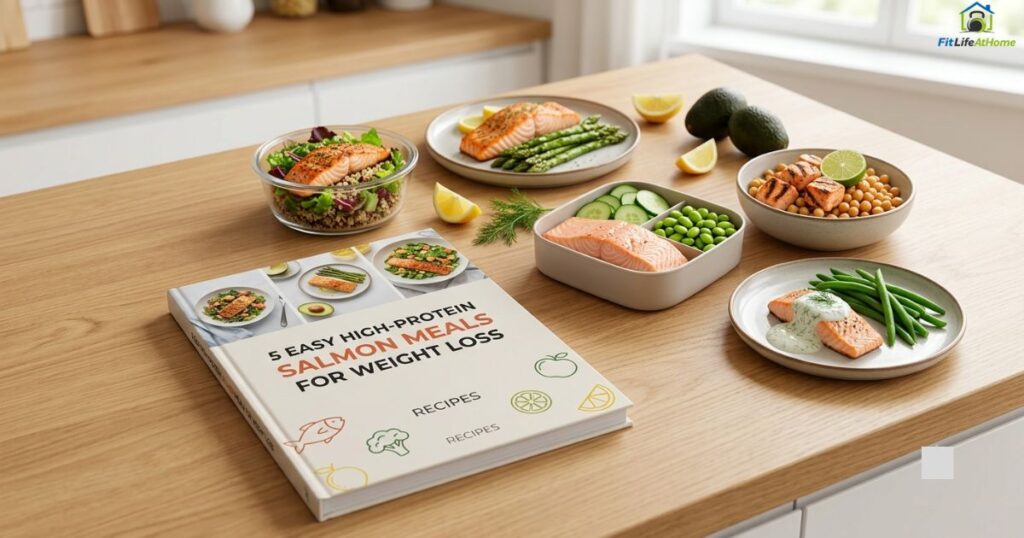
The best salmon meals for weight loss keep protein high and added fat low. Here are five simple, calorie-controlled ideas:
- Sheet-pan salmon and vegetables: a 4-ounce fillet with broccoli or asparagus, roasted at 400°F (about 400 to 450 calories).
- Salmon grain bowl: flaked salmon over greens with a measured scoop of quinoa and plenty of veggies.
- Canned salmon patties: mix with egg and herbs, then pan-sear in a lightly oiled pan.
- Smoked salmon egg-white scramble: a fast, high-protein breakfast.
- Salmon poke bowl: cubed salmon over greens or a small portion of rice with cucumber and edamame.
For more ideas, browse our high-protein meal prep recipes.
Are there any downsides or risks to eating salmon?
For most people, no, salmon is nutrient-dense and low in mercury, which is why the FDA places it in the “Best Choices” category. Still, keep a few things in mind: watch portion size, since salmon’s calories add up faster than leaner proteins; go easy on added fats from cooking; and check sodium in smoked and canned versions. Those who are pregnant or breastfeeding should keep total fish to 8 to 12 ounces per week. For everyone else, the benefits of eating fish comfortably outweigh the risks.
Frequently asked questions
Yes. Salmon is high in protein and healthy omega-3 fats that promote fullness and help preserve muscle during a calorie deficit. A 3 to 4 ounce serving offers about 17 to 22 grams of protein for roughly 130 to 200 calories depending on the type.
Aim for 2 to 3 servings per week, each about 3 to 4 ounces (palm-sized). The FDA lists salmon as a low-mercury “Best Choice” safe to eat 2 to 3 times weekly, and the American Heart Association recommends at least two servings of fatty fish weekly.
Both work. Chicken breast is leaner with slightly fewer calories, while salmon is more filling thanks to its omega-3 fats. Chicken wins on calorie efficiency; salmon wins on satiety. Ideally, eat both.
No single food burns belly fat. Salmon helps indirectly: its protein curbs appetite and preserves muscle, and current evidence suggests its omega-3s may reduce inflammation linked to fat storage. You lose belly fat only within an overall calorie deficit.
For most healthy adults, yes, daily salmon is safe and fits weight loss if it stays within your calories, since it’s low in mercury. Those who are pregnant or breastfeeding should cap total fish at 8 to 12 ounces per week.
Yes. Canned salmon delivers nearly the same protein and omega-3s as fresh, at a lower cost and with no cooking. Choose water-packed to save calories and check the sodium. It’s one of the most affordable high-protein foods around.
Bake, grill, air-fry, poach, or pan-sear with minimal oil. Avoid deep-frying and heavy cream or butter sauces, which can double the calories. Season with lemon, herbs, garlic, or mustard instead of sugary glazes.
Both are good. Wild salmon is leaner with slightly fewer calories; farmed salmon is fattier but often has just as many omega-3s. The difference is minor, so choose whichever you’ll eat consistently and can afford.
No. Most of salmon’s fat is unsaturated omega-3s, with only about 1 to 2 grams of saturated fat per 3 ounces. That fat slows digestion and boosts fullness. What matters for weight loss is your total daily calories, not this fat specifically.
A 3-ounce cooked serving has roughly 130 to 200 calories and 17 to 22 grams of complete protein, with 5 to 11 grams of mostly healthy fat and zero carbs. Leaner species like sockeye sit at the low end; richer ones like king salmon at the high end.
Salmon skin is safe and adds a small amount of calories and fat, much of it beneficial omega-3s. If you’re tightly managing calories it’s a minor add; otherwise it’s fine to eat. Crisping it without extra oil keeps it weight-loss-friendly.
The bottom line
Salmon earns its reputation as one of the best proteins for weight loss, high in filling protein, rich in omega-3 fats, and packed with nutrients, all while fitting a calorie-conscious diet. Just keep the fundamentals in mind: portions around 3 to 4 ounces, simple cooking, no heavy sauces, and 2 to 3 servings a week. Do that, and salmon becomes a genuinely useful ally on the way to a healthier weight.